Plates with Purpose

Sustainable Purchasing
At USC Hospitality, sustainability starts with smart sourcing. We prioritize local, ethical, and environmentally responsible goods—favoring suppliers that support animal welfare, nutritional integrity, and reduced transportation impact. Our purchasing strategy is guided by the AASHE STARS framework, where USC earned a Gold rating in 2023 and was named a Top Performer in Food & Dining in the 2026 Sustainable Campus Index. Our approach aligns with the university’s Assignment: Earth initiative. Signature programs like Never Ever Beef—100% grass-fed with no antibiotics or hormone growth promotants—and certified sustainable seafood reflect our values. By analyzing annual supplier reports across categories like seafood, dairy, produce, and beverages, we ensure our food choices reflect our values.

Choose to Reuse Program
Our reusable container borrow-and-return program launched in Fall 2026 and is managed through our partnership with ReusePass. The program provides reusable containers for dining hall to-go meals, helping reduce single-use waste and support USC Hospitality’s sustainability goals.
All Cardinal, Flex120, Trojan, and Community Meal Plan participants are eligible to participate in the Choose to Reuse program using their USCard. After signing up for a Reuse Pass QR code, participants can enjoy reusable to-go containers at no additional cost. Those who choose not to participate will be charged $2.50 for each disposable to-go container used for a to-go meal in residential dining.
How to Sign Up:
- Sign Up: Go to reusepass.com to create your free account. Tip: add your ReusePass QR code to Apple Wallet or screenshot for easy access
- Borrow: Use your ReusePass QR to check out reusable containers at. EVK, Parkside, and USC Village Dining Halls.
- Enjoy: Enjoy your waste-free meal and return your container within 3 days.
How to Return Your Container(s):
- Remove any remaining food from your container
- Place your empty container into the return bin at these participating locations:
- Everybody’s Kitchen Dining Hall
- Parkside Dining Hall
- Village Dining Hall
- That’s it! After you return your container our dining team scans, washes, and sanitizes your container so it can be used again and again. Your ReusePass account will update to reflect your return within 24-48 hours.
Why Reuse:
USC Hospitality is proud to be a member of the ReusePass community, where our daily habits add up to create real environmental change. Participating campuses made a HUGE impact Fall 2023 – Spring 2026:
- Diverting over 6.5M containers from landfills
- Saved 640K lbs of waste
- Saved 4.2M gallons of water
- Saved 4.4M lbs GHG Co2e
Campus Ambassador Program:
Are you a student who’s passionate about making a positive impact on the environment? Do you believe in the power of responsible consumption for a greener future? If so, CLICK HERE to join the team of ReusePass Campus Ambassadors, and don’t forget to follow ReusePass!
FAQS:
Still have questions? Review our FAQs at ReusePass FAQs or contact our customer support team if you have questions or need help with your ReusePass.
Text: (213) 654-2529
Email: ReusePass@topanga.io
Sustainable Operations
USC Hospitality is committed to sustainable operations that reduce our consumption of resources, generate as little waste as possible, and responsibly reuse any resource waste that we do generate. Programs to promote sustainable operations include:
Reducing Food-Related GHG emissions: We recognize that food systems account for about a third of all greenhouse gas emissions globally, and we work to reduce our food-related environmental impact through innovative procurement strategies, food waste reduction, and promotion of more plant-forward food choices.
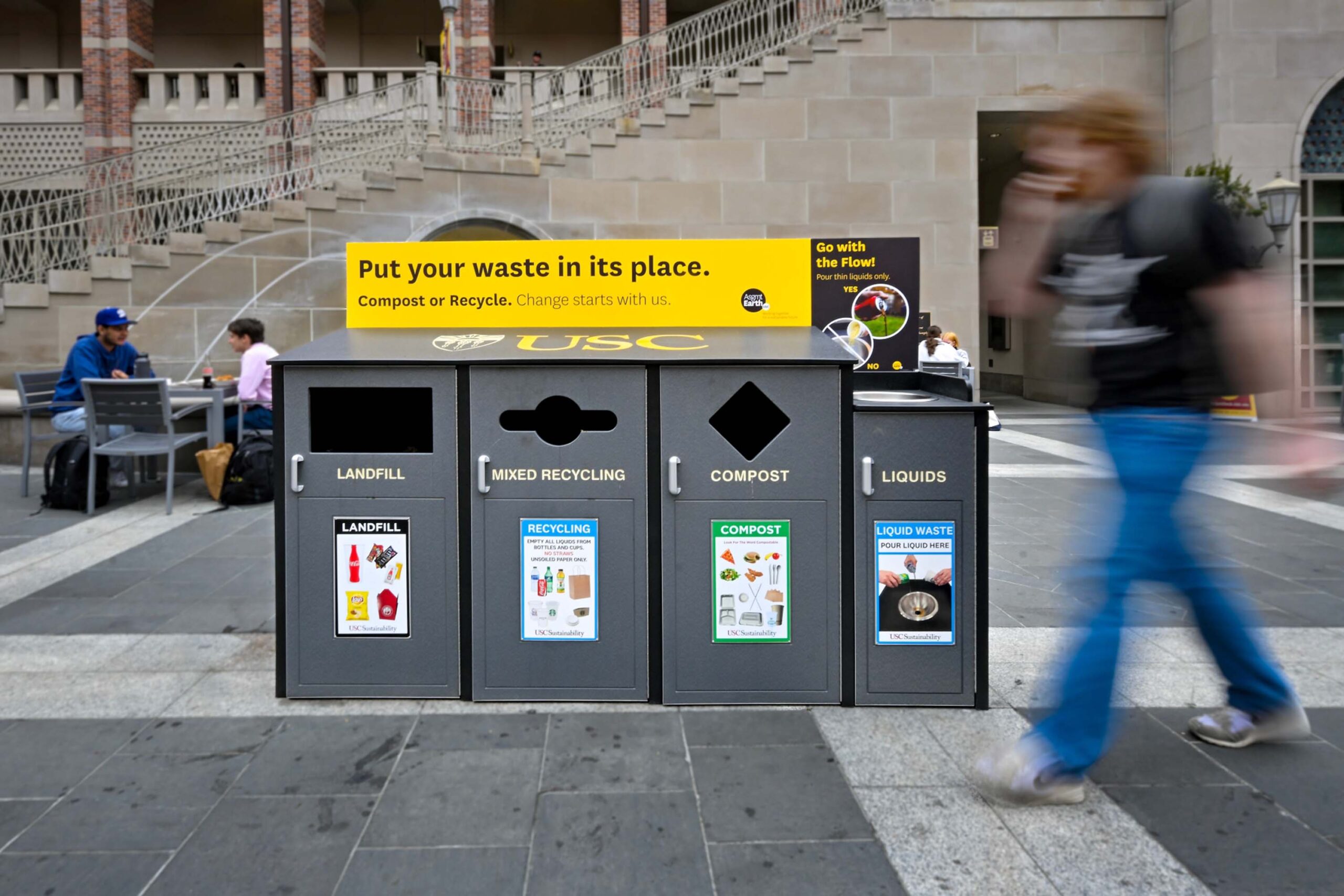
Composting: All dining halls separate pre and post-consumer food waste which is collected by our waste hauler for proper disposal. This includes non-food compostables which are also composted. This process helps in diverting waste from the landfill and results in fewer greenhouse gas emissions.
Recycling: Hospitality also recycles paper, corrugated cardboard, plastic bags, aluminum cans, glass bottles and jars, recyclable containers from all our dining facilities and warehouse processing.
Food Donations: Hospitality donates leftover edible food to partner agencies in the Los Angeles Area, as well as campus partners. In addition, canned goods and other packaged foods are donated to the USC Food Pantry throughout the year with a huge campaign during end of year housing moveout.
Used Cooking Oil Collection: Used oil from the dining halls — approximately 40,000 gallons a year — is reclaimed, renewed and then returned to the marketplace as a vital ingredient in lubricants, animal feed and even clean-burning biofuel.
Energy Conservation: Our dining facilities utilize all ample natural lighting, promoting the use of available sunlight to reduce consumption. When unavailable, installed energy efficient LED bulbs are used.
Water Conservation: Hospitality works closely with our FPM department to identify opportunities and technologies to reduce our water consumption. Aligning with our University framework of 20% potable water use reduction by fiscal year 2028.

Plant Forward Dining
USC Hospitality promotes plant-forward dining as a meaningful way to reduce the environmental footprint of campus meals. Across campus, students can find a wide variety of vegetarian and vegan (plant based) options. Every Monday, our three residential dining halls observe EcoMonday by removing red meat from the menu—encouraging more climate-conscious food choices.
Menus of Change University Research Collaborative
USC is a proud member of this national network of colleges and universities working to shift campus food systems toward healthier, more sustainable models. The collaborative promotes principles such as “Make Whole, Intact Grains the New Norm”, “Focus on Whole, Minimally Processed Foods”, and “Think Produce First” which help guide our menu development. These principles are grounded in culinary strategy, nutrition science, and environmental research—and are reflected in our daily offerings.


Food Waste Prevention
USC Hospitality actively works to reduce food waste before it happens through smart planning and thoughtful service practices. In our kitchens, we use back-of-house tracking and forecasting tools to better predict demand and reduce overproduction. Portion control helps ensure that students get the right amount of food without excess waste, while trayless dining encourages mindful eating and cuts down on uneaten leftovers.

Teaching Garden
The USC Teaching Garden supports a more sustainable and localized approach to campus dining by growing fresh ingredients right on site. This self-sustaining garden produces a variety of vegetables, fruits, herbs, and edible flowers for use in USC Hospitality’s private events, catering and restaurant operations. Using drip irrigation and chemical-free farming practices, the garden reduces environmental impact while providing high-quality, seasonal ingredients.